Introduction
As diesel turbines stay a vital a part of India’s backup energy infrastructure, emission compliance has turn out to be simply as essential as reliability and capability. The Central Air pollution Management Board (CPCB) has progressively tightened emission norms for diesel gensets, pushing producers and customers towards cleaner-running gear. This weblog explains why air pollution management compliance issues and the way it shapes the backup turbines used throughout business and industrial India right this moment.
Why Emission Norms for DG Units Exist
Diesel turbines, when run with out emission controls, launch pollution together with particulate matter, nitrogen oxides (NOx), carbon monoxide, and hydrocarbons. In areas with a excessive density of gensets — business complexes, industrial clusters, and cities with frequent energy cuts — cumulative emissions from these items can meaningfully have an effect on native air high quality. CPCB emission norms set most permissible limits for these pollution based mostly on generator capability, and compliance is meant to cut back this cumulative affect as backup generator utilization continues to develop.
What Compliance Appears to be like Like in Follow
- Engine design: Compliant gensets use engines engineered to manage combustion extra exactly, lowering pollutant formation on the supply.
- Emission management parts: Relying on the compliance stage, this could embrace improved gasoline injection programs and exhaust after-treatment applied sciences.
- Certification and labelling: Compliant turbines carry certification indicating the CPCB norm they meet, which patrons ought to confirm earlier than buy, notably for capability ranges the place norms have just lately modified.
- Gasoline high quality issues: Assembly emission targets persistently additionally relies on utilizing gasoline that meets the required high quality requirements for the engine.
Advantages Past Regulatory Compliance
Whereas avoiding penalties and making certain authorized operation is the quick purpose to decide on compliant turbines, there are sensible advantages too. Compliant engines are sometimes extra fuel-efficient resulting from improved combustion design, and lots of services — notably hospitals, IT parks, and companies with sustainability commitments — more and more deal with emission compliance as a part of their broader environmental accountability, not only a regulatory checkbox.
What Patrons Ought to Test Earlier than Buying
- Verify the particular CPCB norm the generator is licensed to, and examine that it’s the present relevant customary for its capability vary on the time of buy.
- Ask for supporting certification documentation from the producer, not only a verbal assurance.
- Test whether or not native air pollution management authorities require any extra registration or approval for putting in and working the generator at your web site.
- Consider that older, non-compliant gensets could face restrictions or require retrofitting as norms proceed to evolve.
Conclusion
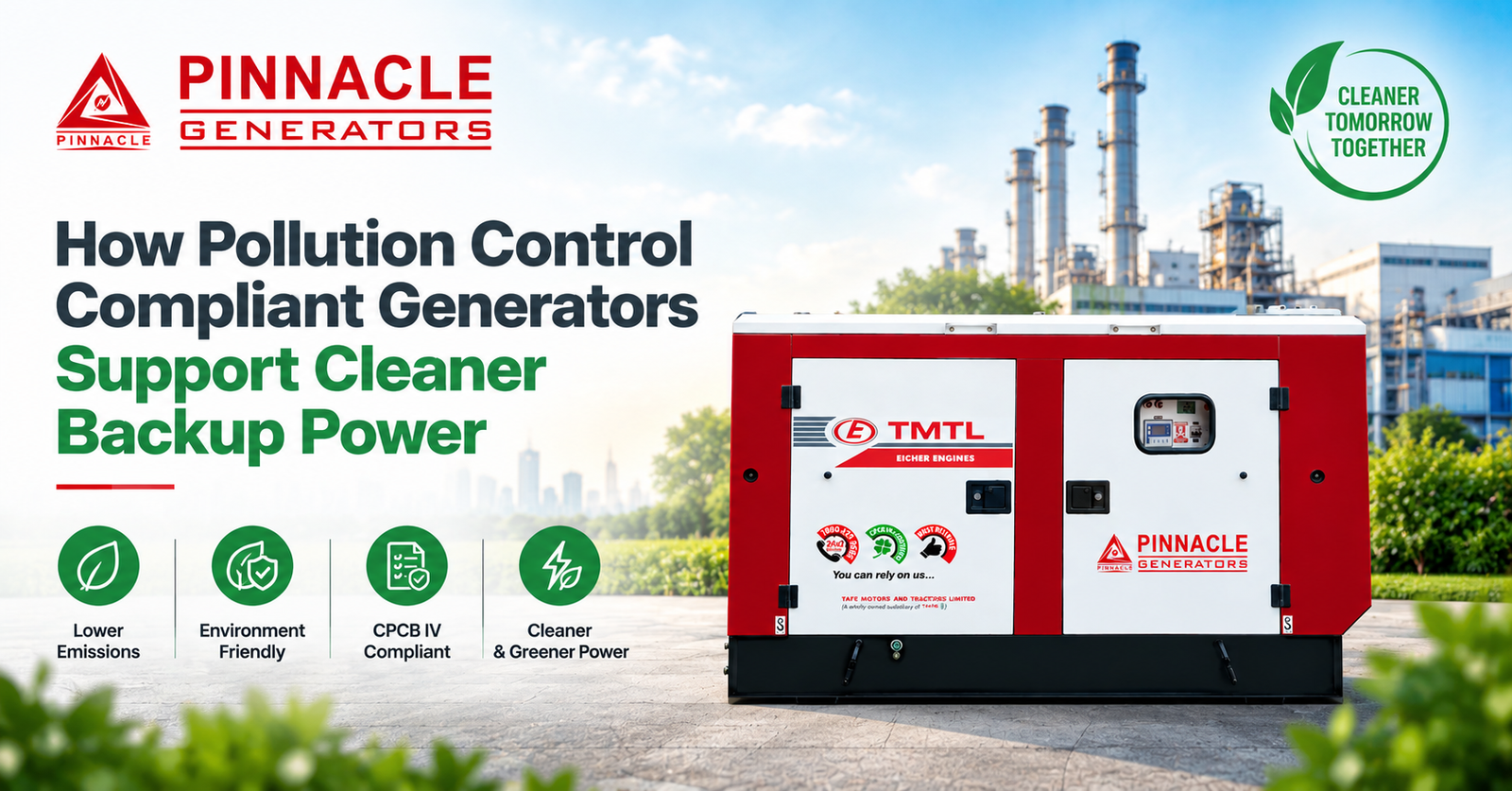
Air pollution management compliant turbines are not only a regulatory requirement — they characterize a significant step towards cleaner backup energy as diesel gensets proceed to play a central function in India’s energy reliability. At Pinnacle Turbines, we provide gensets licensed to present CPCB norms and might help you confirm compliance necessities particular to your location and business. Communicate with our group to decide on a generator that retains your operations each compliant and environment friendly.