Introduction
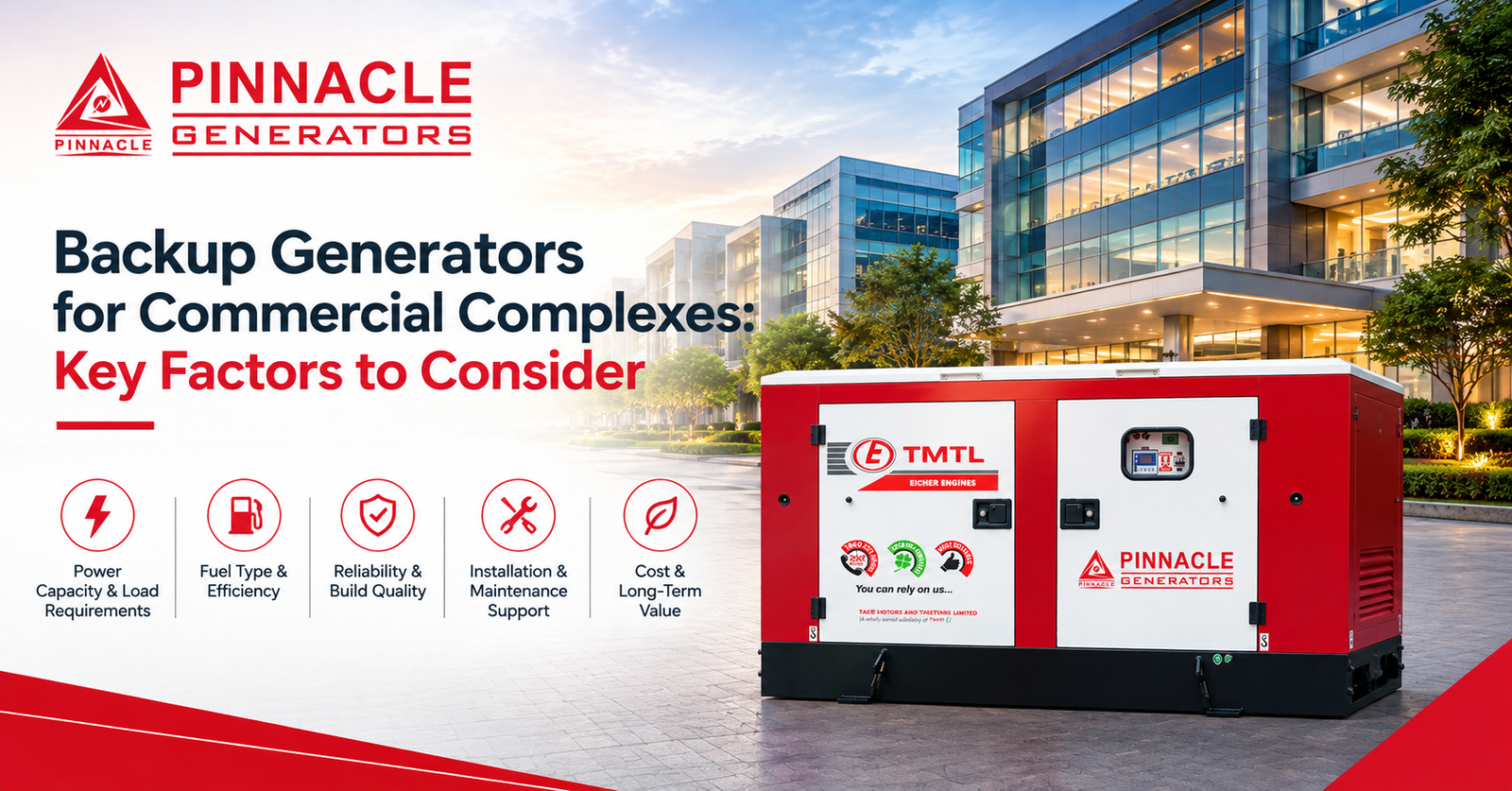
Business complexes — workplace buildings, malls, mixed-use developments, and enterprise parks — home a number of tenants with assorted energy necessities underneath one roof. A single energy outage can have an effect on dozens of companies concurrently, making backup generator planning a shared duty that must be dealt with fastidiously. This information covers the important thing elements facility managers and constructing house owners ought to weigh when choosing backup turbines for industrial complexes.
Understanding the Variety of Hundreds
Not like a single-purpose facility, a industrial complicated usually helps a mixture of masses: frequent space lighting, lifts and escalators, HVAC methods, fireplace and life-safety gear, particular person tenant workplace masses, and generally retail or F&B shops with their very own gear. Planning backup energy means deciding upfront which of those masses completely want steady energy and which might tolerate a brief interruption.
Key Elements to Consider
- Whole related load vs. important load: Most industrial complexes again up solely important providers (lifts, frequent lighting, fireplace methods, choose tenant masses) somewhat than all the constructing, which considerably impacts generator sizing.
- Scalability: As occupancy grows or extra tenants transfer in, the backup energy system ought to ideally enable for capability enlargement and not using a full overhaul.
- Area and set up constraints: Business buildings typically have restricted house for generator rooms or rooftop installations, which impacts the selection between a single giant DG set and a number of smaller items.
- Noise and emission norms: Complexes positioned in blended residential-commercial zones have to think about native noise rules and CPCB emission compliance, particularly the place turbines might run throughout enterprise hours.
- Gasoline storage and logistics: Satisfactory diesel storage, refuelling entry, and security compliance for gas storage must be deliberate on the design stage, not as an afterthought.
- Metering and price allocation: In multi-tenant buildings, there needs to be a transparent system for metering generator utilization so prices might be pretty distributed amongst tenants.
Single Giant Genset vs. A number of Smaller Items
Bigger complexes typically face a selection between putting in one large-capacity DG set or a number of smaller items working in parallel. A parallel configuration presents redundancy — if one unit wants servicing, others can proceed supplying energy — and permits the system to run extra effectively at partial masses, since solely as many items as wanted are activated at a given time. A single giant unit might be easier to keep up however creates a single level of failure.
Upkeep in a Multi-Stakeholder Surroundings
As a result of industrial complexes usually contain a facility administration firm, constructing proprietor, and a number of tenants, upkeep schedules want clear communication in order that generator testing and servicing don’t catch tenants off guard. A structured AMC with outlined response instances for breakdowns is especially essential given the variety of companies that rely upon the identical backup system.
Conclusion
Backup energy for industrial complexes is as a lot about planning and coordination as it’s about {hardware}. At Pinnacle Turbines, we assist facility managers assess important masses, select between single and parallel DG configurations, and put a upkeep construction in place that retains tenants powered reliably. Get in contact with our group to plan backup energy in your industrial property.
Trending Merchandise