The Brief Reply: Load financial institution testing makes certain that mills can deal with their full electrical load throughout an emergency. It is very important observe codes like NFPA 110 and NFPA 99, which define the testing frequency, length, and particular necessities for generator load financial institution testing. Common testing helps forestall points like moist stacking and ensures your generator is prepared when wanted most.
For contractors and constructing engineers liable for sustaining industrial mills, load financial institution testing is a vital job to make sure dependable operation when the generator is required most. Nonetheless, conducting load financial institution testing correctly requires adherence to particular codes and requirements to ensure security, efficiency, and compliance. On this weblog, we’ll cowl the important trade requirements and codes it’s worthwhile to observe for generator load financial institution testing.
What’s Load Financial institution Testing?
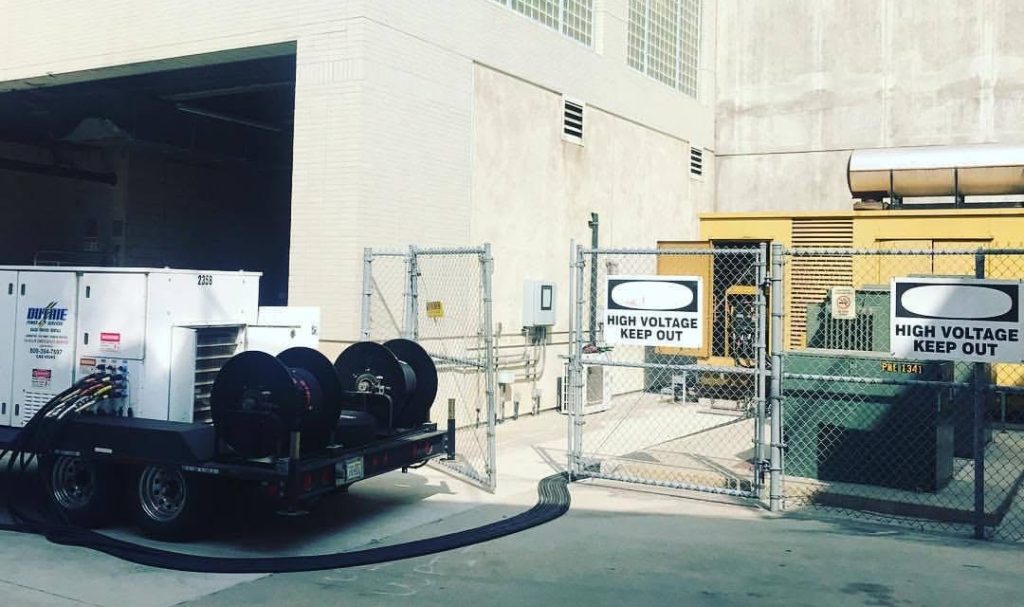
Load financial institution testing simulates {the electrical} load a generator will face throughout an actual emergency. By making use of a man-made load to the generator, contractors and engineers can make sure the generator is able to producing the mandatory energy when wanted.
The objective of load financial institution testing is to confirm that the standby generator can deal with {the electrical} load it’s rated for. One of these testing helps detect potential points, similar to moist stacking, and ensures that each one parts of the generator, together with the exhaust system and prime mover, are functioning accurately beneath stress.
Load financial institution exams are designed to simulate {the electrical} demand the generator will expertise throughout an precise energy failure, offering peace of thoughts that the generator will carry out as required in an emergency.
The Codes and Requirements for Load Financial institution Testing
Adhering to the suitable codes and requirements for load financial institution testing is important for compliance and making certain the generator operates successfully. Completely different organizations set forth these requirements to make sure emergency energy mills carry out optimally when referred to as upon.
NFPA 110: Customary for Emergency and Standby Energy Techniques
NFPA 110 is the first code governing load financial institution testing for emergency energy programs. It outlines testing frequency, processes, and standards for numerous parts of standby mills.
Key Necessities from NFPA 110:
- Testing Frequency: For Degree 1 and Degree 2 programs (important programs like hospitals or knowledge facilities), the code requires full load financial institution testing at the least as soon as each three years.
- Period of Testing: The load financial institution take a look at ought to final 2 hours. The load must be utilized step by step:
- 30% load for the primary half-hour
- 50% load for the following half-hour
- 100% load for the ultimate hour
- Simulating Precise Masses: The take a look at should simulate the true electrical load the generator will deal with. If facility hundreds are inadequate, a conveyable load financial institution can be utilized.
NFPA 99: Healthcare Amenities
For contractors working in healthcare settings, NFPA 99 governs the testing {of electrical} programs, together with load financial institution testing in hospitals and different healthcare amenities.
NFPA 99 Load Financial institution Testing Particulars:
- Annual Testing: Turbines in healthcare amenities should bear annual load testing to make sure they carry out nicely in emergencies.
- 90-Minute Take a look at: In contrast to NFPA 110, NFPA 99 requires a steady 90-minute take a look at beneath load, beginning with the next share of the generator’s rated capability.
Native Constructing Codes and Laws
Along with nationwide requirements, native jurisdictions could have particular necessities that transcend NFPA 110 and NFPA 99. At all times examine together with your native Authority Having Jurisdiction (AHJ) to make sure full compliance with native constructing codes.
The Completely different Forms of Load Financial institution Testing
When conducting load financial institution testing, various kinds of load banks are used relying on the generator’s supposed use and the load situations it’ll face.
Resistive Load Financial institution vs Reactive Load Financial institution
There are two principal forms of load banks that can be utilized throughout testing: resistive load banks and reactive load banks.
Resistive Load Financial institution
- Simulates actual energy: A resistive load financial institution makes use of resistive parts (like heaters) to immediately simulate {the electrical} load that the generator will deal with in on a regular basis operations.
- Generally used: It’s the most typical sort of load financial institution used for testing, because it mimics the standard electrical demand of most buildings and amenities.
Reactive Load Financial institution
- Simulates reactive hundreds: A reactive load financial institution is used to simulate hundreds present in programs with inductive parts like motors. It introduces a magnetic discipline to create a reactive load, serving to take a look at the generator’s potential to help such programs.
- Used for specialised testing: These are particularly helpful for testing mills that energy gear like air-con programs or massive motors, which require a reactive factor.
Synthetic Load vs Electrical Load
Whereas synthetic load is used throughout load financial institution testing, it’s vital to know the distinction between this and the precise electrical load the generator could face throughout an influence failure.
Synthetic Load
- Simulated load: An artificial load is created by digital load banks or resistive/reactive parts. These are used when the power’s actual load is inadequate for testing.
Electrical Load
- Actual-world demand: Electrical load refers back to the precise energy demand positioned on a generator throughout an emergency. It contains programs like lighting, cooling, and computer systems, which require fixed and dependable energy.
Why Common Load Financial institution Testing Issues
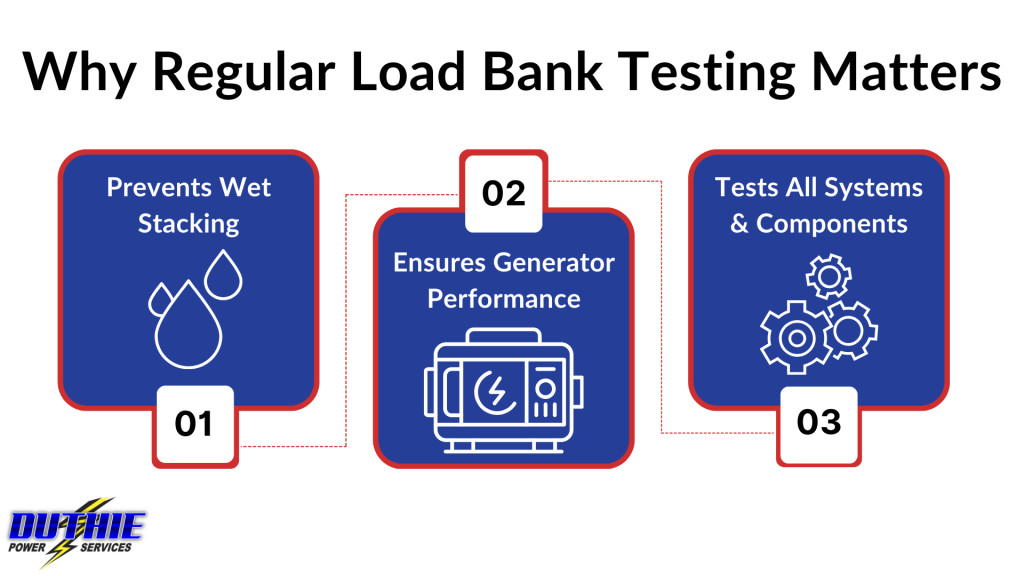
Common load financial institution testing is important for making certain that your generator stays dependable and performs successfully beneath real-world situations. This routine testing helps forestall main points that may compromise a generator’s efficiency when it’s wanted most.
Stopping Moist Stacking
Wet stacking happens when a generator runs at low hundreds for prolonged intervals, inflicting unburned gas to build up within the engine. This difficulty is particularly frequent in diesel mills which might be underused. Load financial institution testing forces the generator to run at full capability, which prevents moist stacking and ensures the engine operates at optimum temperatures.
Guaranteeing Generator Efficiency
Common load testing ensures that your emergency generator can meet its output capability when it’s referred to as into motion. It checks the generator’s potential to deal with electrical power calls for and ensures it could present the mandatory backup energy. With out this testing, you danger not figuring out whether or not your generator will fail throughout an emergency.
Take a look at All Techniques & Elements
Throughout load financial institution testing, all programs and parts of the generator are put to the take a look at to make sure they carry out correctly beneath full load. This contains checking the exhaust system, gas supply, cooling programs, and electrical parts. Every a part of the generator should function successfully to make sure dependable efficiency throughout an influence failure.
What Occurs Throughout a Load Financial institution Take a look at?
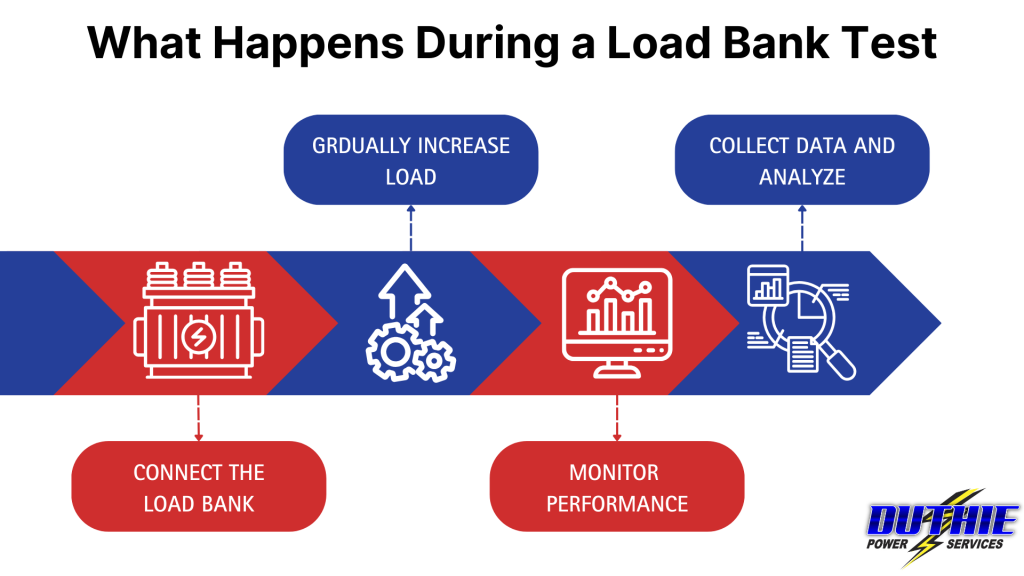
A load financial institution take a look at simulates the real-world electrical load {that a} generator might want to deal with in an emergency. The take a look at ensures that the generator performs nicely beneath various load situations, serving to engineers assess its potential to fulfill energy calls for and function at full capability.
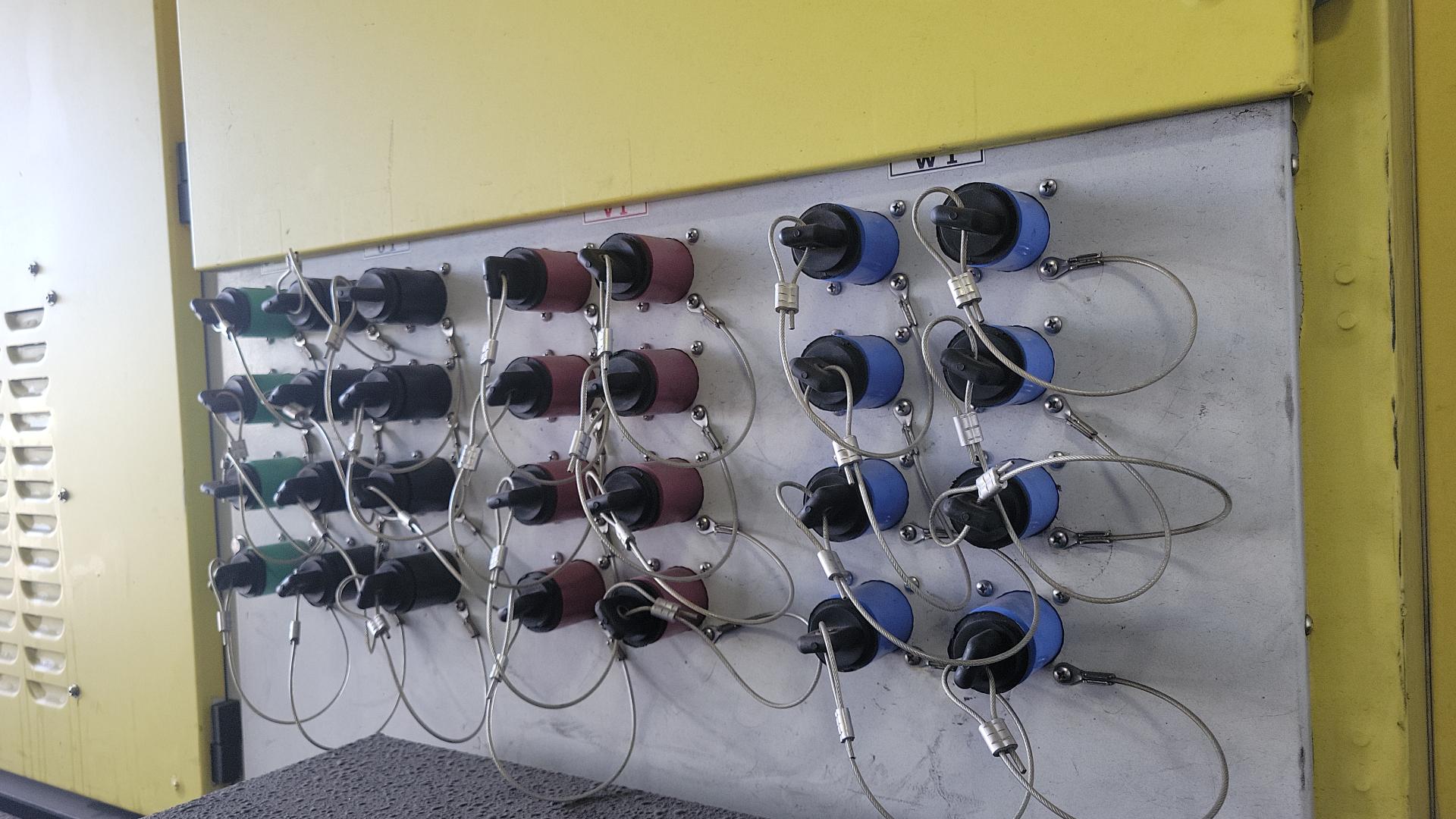
Connecting the Load Financial institution
To start, a conveyable load financial institution is linked to the generator. The load financial institution applies a gradual electrical load, which will increase over time to simulate the generator’s actual working situations.
Gradual Load Enhance
The load is elevated in phases to emphasize take a look at the generator:
- 30% load for the primary half-hour
- 50% load for the following half-hour
- 100% load for the ultimate hour
This gradual improve ensures that the generator operates easily throughout its complete electrical load vary, simulating real-world situations.
Efficiency Monitoring
In the course of the take a look at, key parameters like gas effectivity, unburned gas, exhaust temperature, and electrical output are carefully monitored. This knowledge helps engineers assess the generator’s efficiency and establish any potential points.
Information Assortment and Evaluation
After the take a look at, efficiency knowledge is collected, together with info on output capability, gas consumption, and generator effectivity. This knowledge is analyzed to verify that the generator meets its nameplate KVA score and operates effectively beneath full load situations.
Guarantee Your Generator is Prepared
Complying with NFPA 110, NFPA 99, and native constructing codes is important for contractors and engineers liable for load financial institution testing. Common load exams be certain that emergency energy mills are able to carry out when wanted most. By adhering to those trade requirements, you assist forestall points like moist stacking, preserve generator efficiency, and guarantee dependable energy for important programs.
At Duthie Power, our professional technicians are prepared that will help you meet compliance requirements and supply dependable backup energy if you want it. For extra info on generator load financial institution testing necessities, request a quote or give us a name at 1-800-899-3931.
Trending Merchandise